Company Update | Professor Su Hui Shares the “Project Feilian” with Industry, Ushering in a New Era of Global 3D Wind Field Observation!
Professor Su Hui, Chair Professor in the Department of Civil and Environmental Engineering at the Hong Kong University of Science and Technology, Distinguished Innovation Scholar, and Founder and Chairman of StarSee Cloud Intelligence, attended the 4th “Space, Atmosphere, Ocean and Environmental Optics” Academic Conference (SAME 2026) in Xian, Shaanxi from March 27 to 29, 2026. She also delivered a keynote sharing at the Haitong International 2026 Commercial Aerospace Summit Forum in March, joining industry leaders to explore new opportunities and a new chapter in aerospace technology.
The two conferences focused respectively on academic frontiers and industrial applications. The “Space, Atmosphere, Ocean and Environmental Optics” Academic Conference addressed major strategic needs in aerospace, deep earth, and deep sea technologies under the national “14th Five-Year Plan,” concentrating on four key areas: space optics, atmospheric optics, ocean optics, and environmental optics. It brought together academicians and leading scientists to promote interdisciplinary innovation in optical technologies. Meanwhile, the Haitong International 2026 Commercial Aerospace Summit Forum gathered top global commercial aerospace forces, including representatives from HKUST and research institutions, as well as leading enterprises such as LandSpace, Changguang Satellite, Qianyu Aerospace, Spacety, Lanta Intelligence, Jingji Communications, and Aerospace Changxing, to jointly explore cutting-edge developments and the future of the aerospace industry.
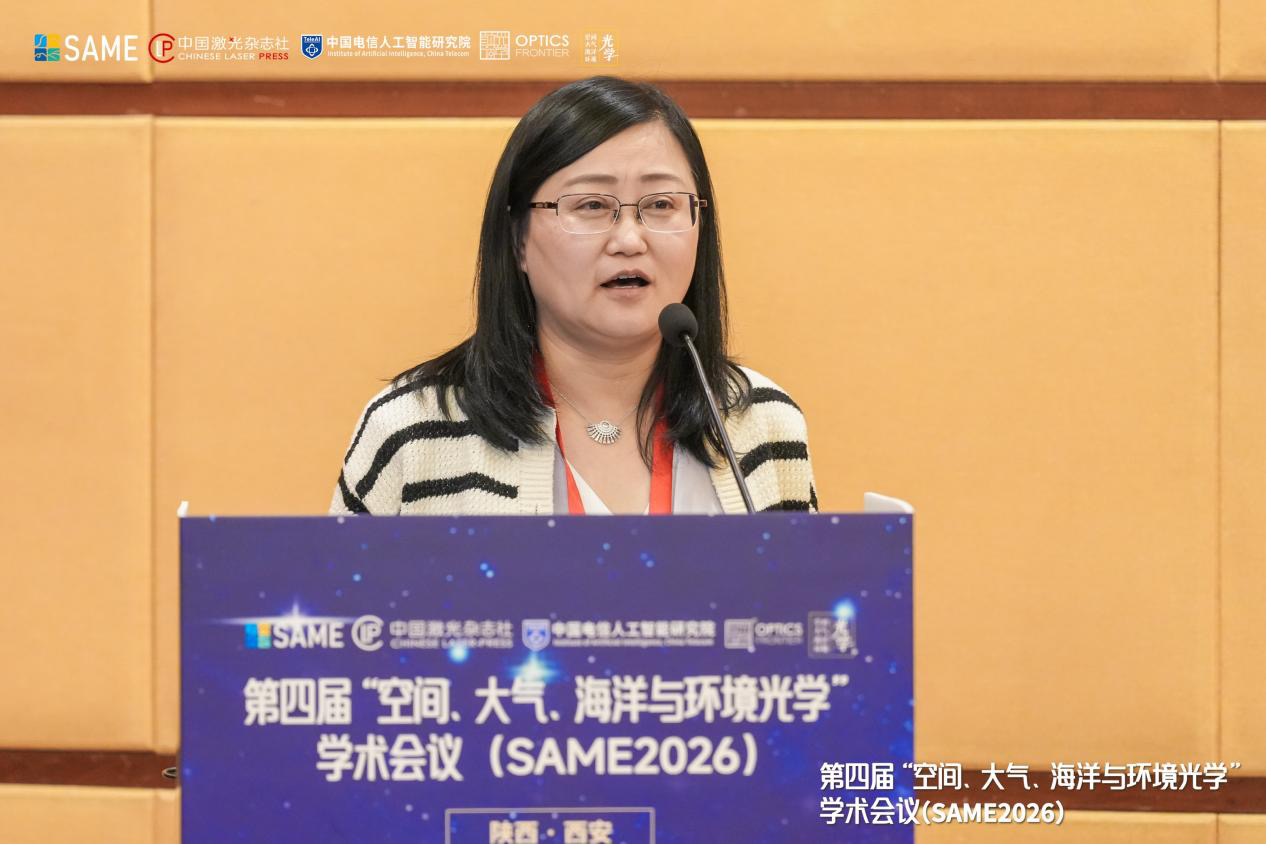
At the SAME 2026 conference, Professor Su Hui delivered a keynote titled “Feilian Constellation: The World’s First High-Precision 3D Wind Field Detection Satellite Constellation.”
At the SAME 2026 conference, Professor Su Hui delivered a keynote titled “Feilian Constellation: The World’s First High-Precision 3D Wind Field Detection Satellite Constellation,” systematically elaborating on the scientific significance and industrial value of 3D wind field observation, and highlighting the key technological breakthroughs and application prospects of StarSee Cloud Intelligence’s “Feilian Constellation” in this field.
Professor Su pointed out that the three-dimensional atmospheric wind field, as a core variable in meteorological systems, plays a fundamental and decisive role in multiple critical areas, including weather forecasting, atmospheric pollution transport, greenhouse gas emissions, atmospheric circulation, ocean circulation, and energy exchange processes such as surface sensible and latent heat fluxes. It also has profound impacts on key Earth system mechanisms such as air–sea and land–atmosphere interactions, making it one of the core observational elements receiving significant attention from the international scientific community. According to NASA’s Decadal Survey (2017), “wind”-related content was mentioned as many as 211 times, further highlighting its foundational and strategic importance in meteorology and climate research. At the same time, atmospheric wind fields have broad application value in new energy, low-altitude economy, disaster warning, aviation and maritime operations, and carbon monitoring, serving as essential foundational data for future climate technology and industrial development.
However, in stark contrast to its importance, current 3D wind field observation capabilities remain significantly limited. The existing observation system faces constraints on multiple fronts: ground-based observations are mainly concentrated over land, leaving about 70% of the Earth (oceans) without effective coverage, and are insufficient to reflect large-scale atmospheric circulation structures; in terms of space-based observation, current technologies primarily provide two-dimensional cloud-top wind information and are constrained by the high orbital altitude (≥35,786 km), resulting in clear limitations in spatial resolution and accuracy; additionally, under convective weather conditions, reanalysis wind field data also exhibit significant errors, further limiting their application in high-precision weather forecasting and extreme weather analysis.
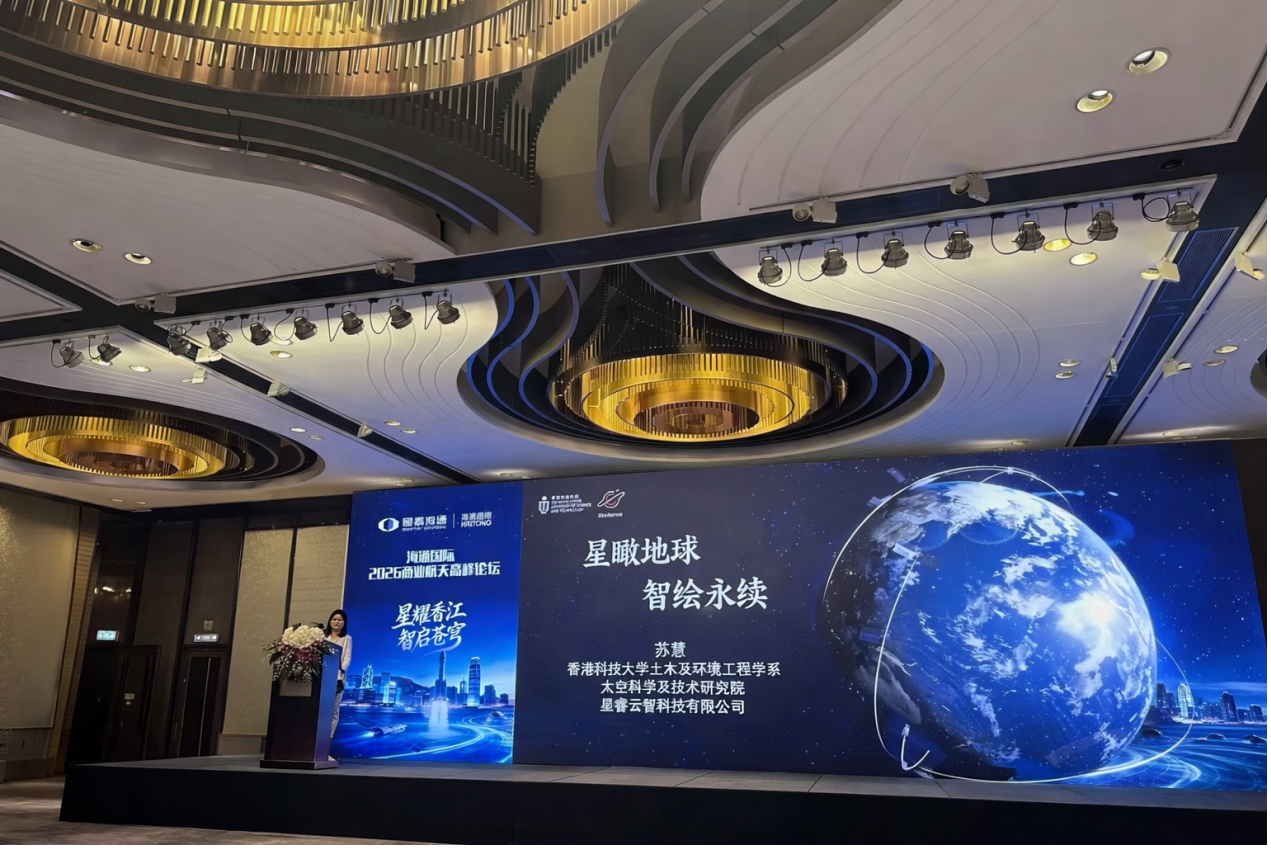
At the Haitong International 2026 Commercial Aerospace Summit Forum, Professor Su Hui delivered a keynote titled “Observing Earth from Space, Intelligently Mapping Sustainability.”
To address these key bottlenecks, StarSee Cloud Intelligence has launched the “Feilian Constellation” project, aiming to build the world’s first high-precision 3D wind field detection satellite constellation. Technically, the constellation adopts an Atmospheric Motion Vector (AMV) inversion method based on water vapor feature tracking. By dynamically tracking tracers such as water vapor in the atmosphere, integrating observational data obtained from infrared sensors, and applying artificial intelligence algorithms, it achieves high-precision inversion and reconstruction of 3D wind fields. Studies show that traditional wind field products typically have errors of about 3–8 m/s, whereas this method can reduce errors to approximately 2 m/s, significantly improving observation accuracy and data reliability.
Building on this, the “Feilian Constellation” adopts an innovative dual-satellite co-orbit design, enabling continuous tracking of dynamic changes in atmospheric tracers (such as water vapor), thereby obtaining high-resolution 3D wind field data and demonstrating strong industrial application potential. In the clean energy sector, it can enhance forecasting capabilities for wind and photovoltaic power generation and optimize energy dispatch; in the low-altitude economy, it supports the safe operation and route planning of drones and eVTOL aircraft; in disaster prevention and mitigation, it can significantly improve early warning capabilities for extreme weather events such as typhoons, heavy rainfall, floods, and landslides; meanwhile, in carbon monitoring and ESG applications, it can also strengthen greenhouse gas tracking and transmission analysis capabilities.
Furthermore, accurate measurement of three-dimensional atmospheric wind fields is crucial for weather forecasting, climate research, and building a climate-resilient economy. Atmospheric Motion Vectors derived from paired infrared sensors tracking water vapor data can improve weather forecast accuracy by 10% to 20%. The “Feilian Constellation” fills a critical gap in global 3D wind field observation, delivering long-term value for scientific research and societal well-being.
As a meteorological technology company incubated by the Hong Kong University of Science and Technology, StarSee Cloud Intelligence is building the world’s first satellite system dedicated to high-precision, high-resolution 3D wind field observation, centered on the “Feilian Constellation.” The team integrates proprietary satellite data with self-developed AI models to continuously deliver high-resolution, decision-ready climate insights, offering climate technology products and solutions to governments, enterprises, and infrastructure operators, and providing critical technical support for global climate governance, disaster risk management, and sustainable development.
Image source: Provided by the conference organizer