Expert Team from Sichuan Institute of Geological Survey Visits Hong Kong for Training on Geological Disaster Monitoring and Early Warning Technologies — Sichuan and Hong Kong Join Hands to Expand Satellite Remote Sensing and AI Meteorology Applications to
From November 16 to 29, 2025, the Sichuan Institute of Geological Survey organized a team of experts to visit Hong Kong. Led by senior institute officials, the team conducted a 14-day "Key Technologies Training on Urban Geological Disaster Monitoring, Early Warning, and Prevention" at the Hong Kong University of Science and Technology (HKUST). The training was hosted by the Department of Civil and Environmental Engineering at HKUST and organized by Stellerus Technology Limited. It systematically delivered a professional training program in Hong Kong focusing on the integration of satellite remote sensing, artificial intelligence, meteorological modeling, and engineering safety technologies, playing a significant role in promoting the modernization of urban safety governance systems.
The training was guided by cutting-edge technologies and an international perspective. Based on the Sichuan Institute of Geological Survey's long-term practical experience in high-risk mountainous areas of Sichuan and Tibet, and considering Hong Kong's unique urban context of limited space, complex geological structures, and high-density infrastructure, the program explored building a future-oriented urban geological disaster monitoring and early warning system by integrating satellite remote sensing data, ground monitoring technologies, meteorological models, and risk assessment systems.
Training Focused on Building a Complete Technology Chain
The training focused on urban geological disaster monitoring, risk identification, early warning system construction, and emergency decision-making, aiming to enhance the expert team's comprehensive capabilities across the entire disaster management chain. Courses combined theory and practice, enabling experts to master urban geological disaster monitoring, prevention logic, and risk assessment methods, as well as understanding the role of satellite remote sensing in disaster identification and dynamic perception. On the technical application level, the training guided experts to become familiar with ground monitoring instruments, remote sensing data processing, and early warning model construction, ensuring seamless integration from data collection to model fusion. Through case studies, field visits, and interactive exchanges, cross-regional collaboration and experience sharing were promoted, advancing coordinated innovation in disaster mitigation technologies. The training also emphasized the construction of disaster prevention systems, strengthening emergency plan development and command decision-making capabilities to improve urban response efficiency and resilience during sudden disaster events.
Authoritative Expert Lineup, Interdisciplinary Integration Leading Future Disaster Management
The training courses were delivered by senior professors and industry experts from the Department of Civil and Environmental Engineering at HKUST. The instructor lineup covered multiple fields including geological risk, meteorological science, artificial intelligence, underground engineering, remote sensing monitoring, and urban emergency management. During the training, instructors systematically explained the principles of traditional and satellite monitoring technologies, data acquisition, image processing, and early warning system construction. Through practical cases and on-site interactions, the expert team was ensured to translate cutting-edge theories into practical work capabilities. Course content included: urban geological disaster risk analysis and full-chain management; application of urban meteorology in monitoring, early warning, and prevention of geological disasters; disaster chains of heavy rain and glacial landslides/debris flows; application of AI in geological disaster monitoring and early warning; urban road collapse and underground pipeline safety monitoring technologies; principles and technologies of geological disaster remote sensing; low-altitude meteorological digital bases and urban resilience management; and Hong Kong's geological and engineering challenges and urban flood disaster analysis.
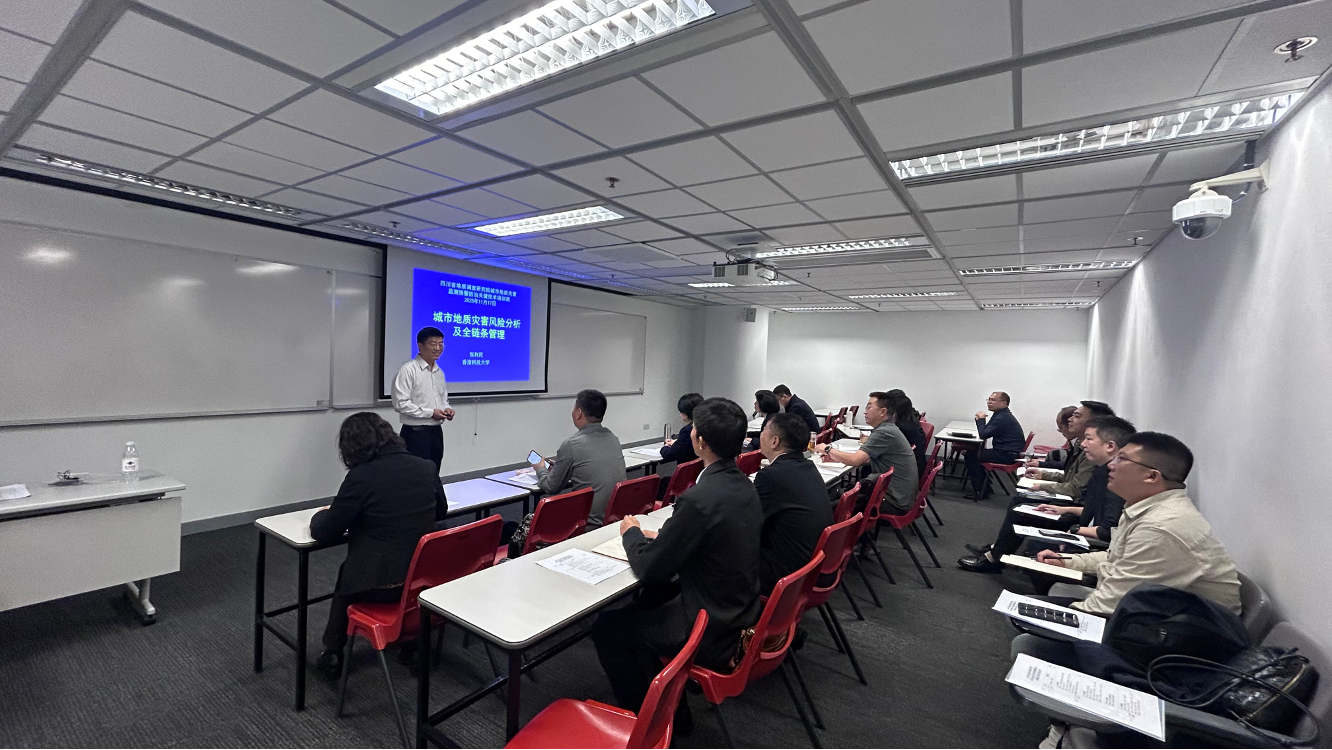 Chair Professor and Head of the Department of Civil Engineering, Prof. Zhang Limin, explains “Urban Geological Disaster Risk Analysis and Full-Chain Management”
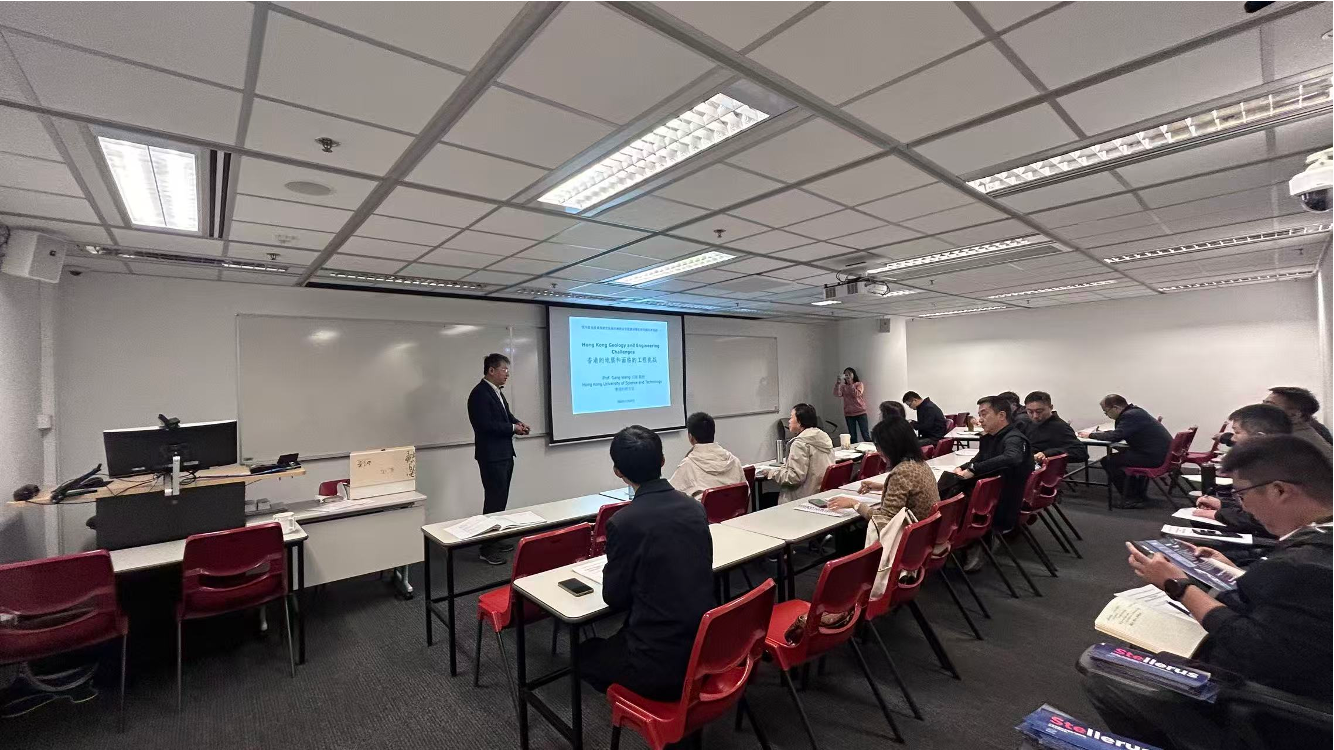 Professor and Deputy Head of the Department of Civil Engineering, Prof. Wang Gang, explains “Hong Kong’s Geology and Engineering Challenges”
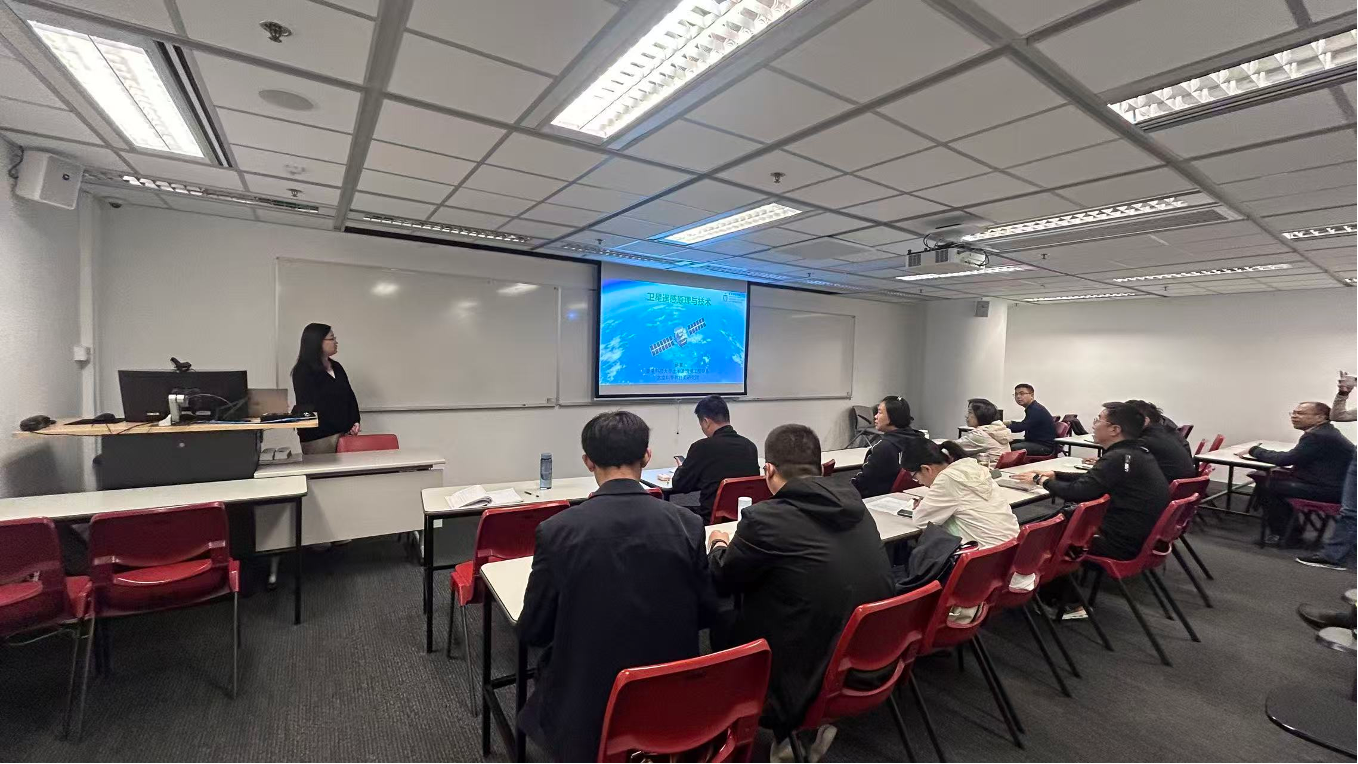 Chair Professor, Prof. Su Hui, explains “Principles and Technologies of Satellite Remote Sensing”
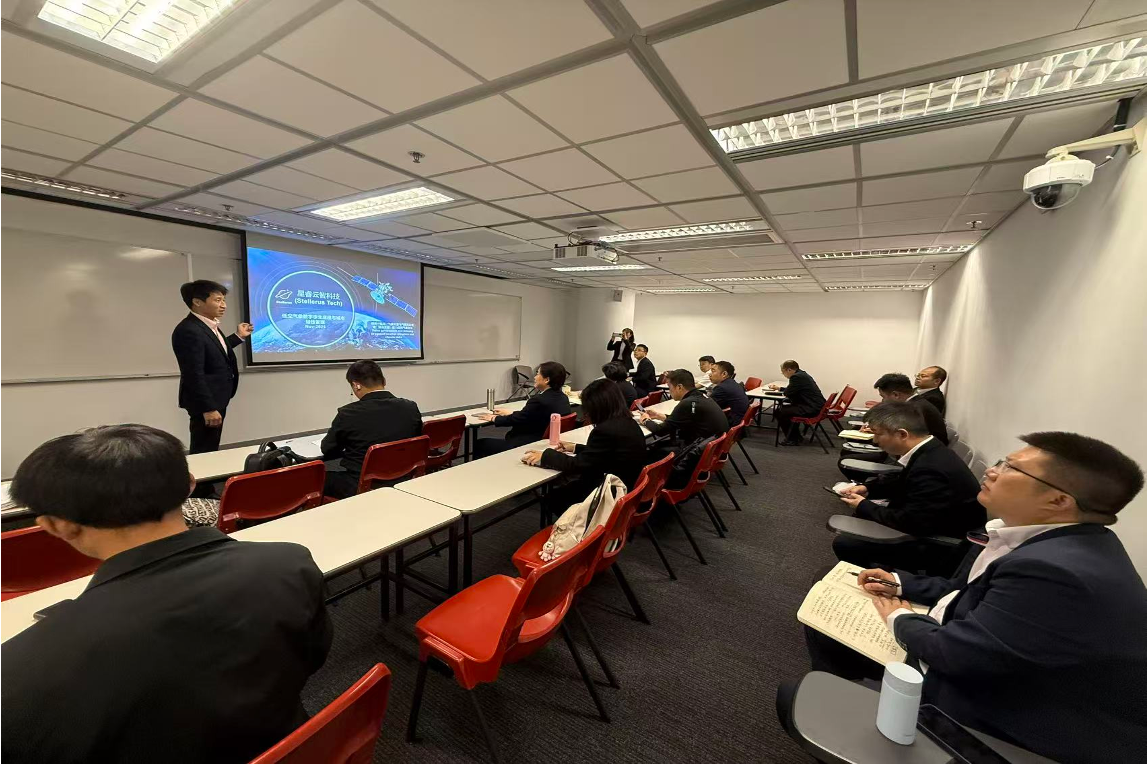 Chief Product Officer of Stellerus Technology Limited, Dr. Hu Mingyuan, explains “Low-Altitude Meteorological Digital Base and Urban Resilience Management”
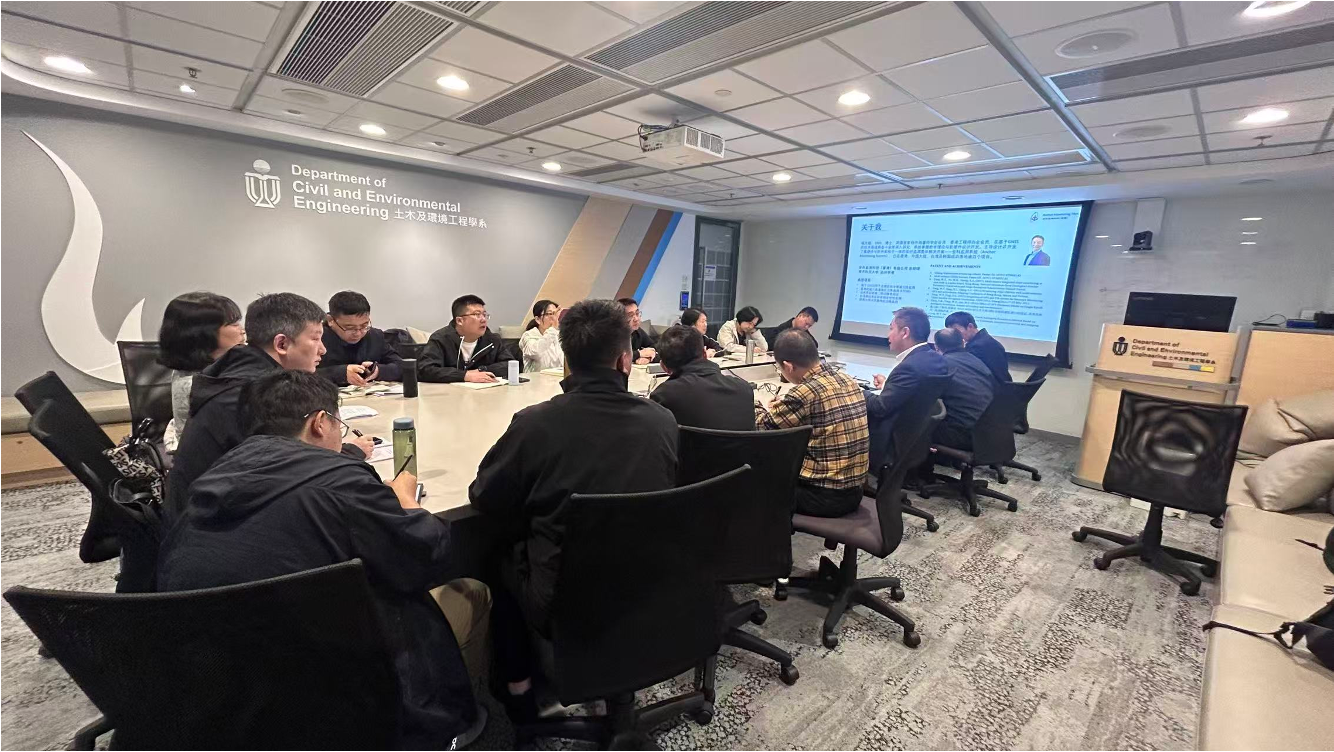 General Manager of Anko Monitoring Technology (Hong Kong) Limited, Dr. Yang Wentao, explains “Urban Road Collapse and Underground Pipeline Safety Monitoring Technologies”
Entering Research Sites to Build New Urban Geological Disaster Monitoring Scenarios
In addition to classroom instruction, the training included multiple field teaching and visit sessions, allowing the expert team to deepen their understanding and application of relevant technologies in real research and engineering environments. The team visited several core research facilities at HKUST, including the Jockey Club Innovation Laboratory (Convection and Precipitation) and the Geotechnical Engineering Centrifuge Laboratory, and also visited the UNESCO Global Geopark, Ho Man Tin Slope Study Trail, and Volcano Exploration Pavilion for learning and exchange.
The HKUST Geotechnical Engineering Centrifuge, as Hong Kong's first large-scale centrifuge, can simulate complex conditions such as tunnel excavation, deep excavation, and earthquakes, verifying engineering designs and soil deformation patterns, providing technical support for complex geological problems. The Jockey Club Innovation Laboratory improves precipitation forecasting accuracy through data analysis and model simulation, enhancing extreme weather early warning capabilities. Through these scenario-based teaching activities, the expert team gained not only a hands-on experience of theoretical concepts and technical methods, but also a clearer and more practical understanding of disaster monitoring and resilience building in urban environments.
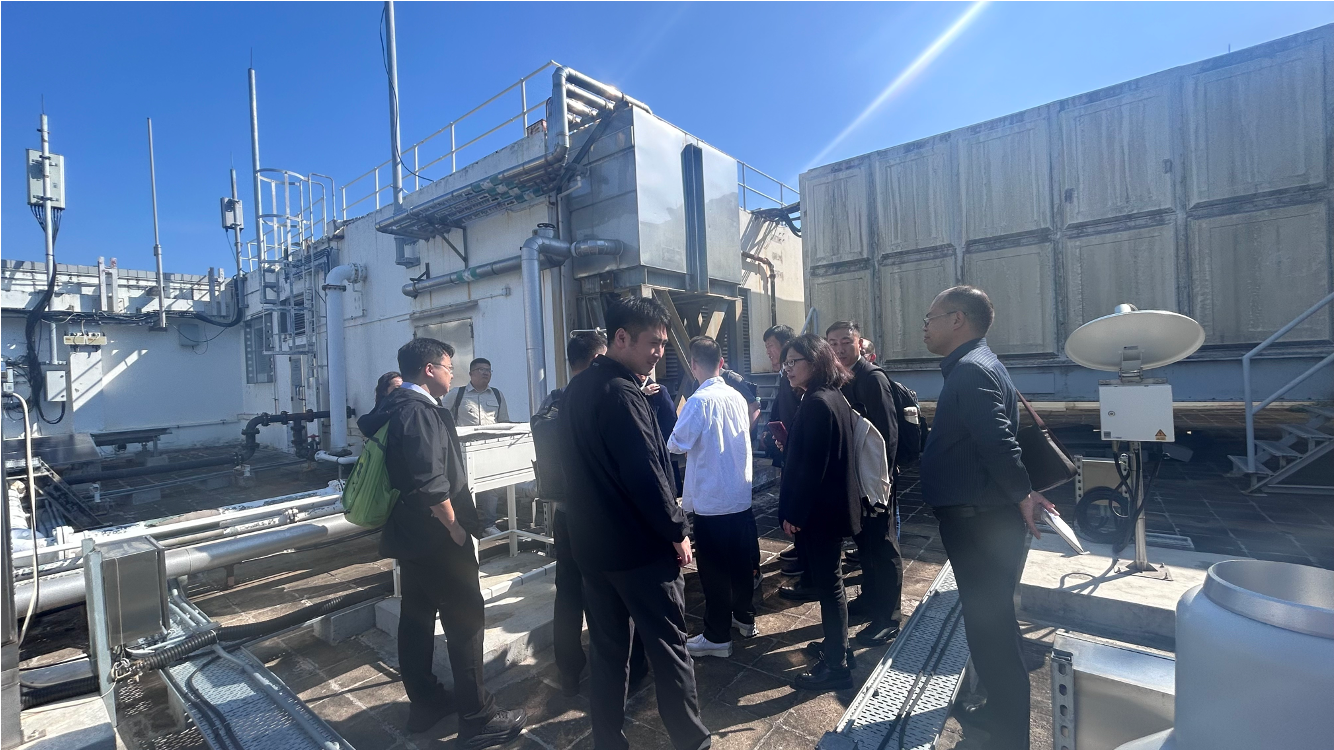 Expert team visits HKUST Jockey Club Innovation Laboratory (Convection and Precipitation)
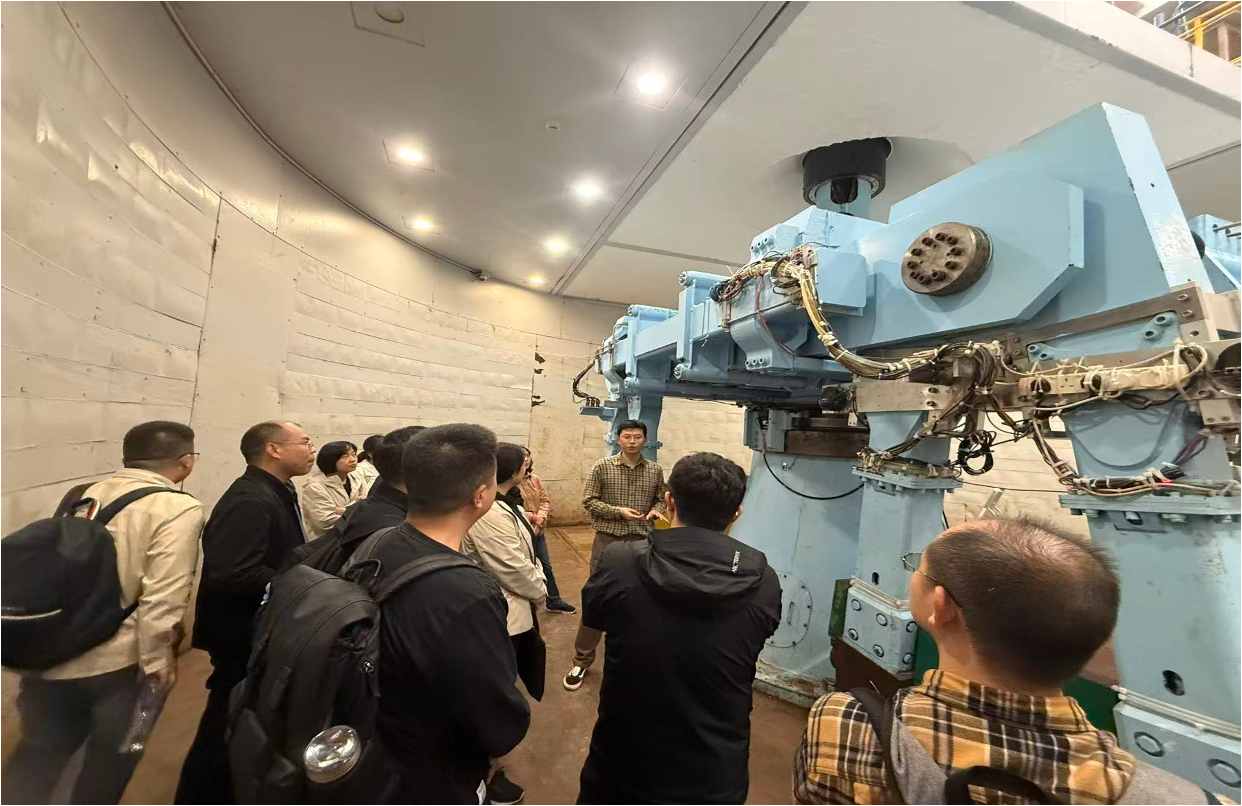 Expert team visits HKUST Geotechnical Engineering Centrifuge Laboratory
Cross-Institution Exchange Expands Urban Resilience Governance Perspective
During the exchange visits, the expert team visited the Hong Kong MTR Headquarters, Hong Kong Observatory, Hong Kong and China Gas Company Limited, and the Hong Kong Civil Engineering and Development Department. In addition to facility tours, the team participated in discussions and technical exchanges to gain in-depth insights into Hong Kong's practices in urban operations, safety management, and energy transition.
The Hong Kong Observatory specially arranged a comprehensive exchange learning activity, where the expert team visited the Meteorological Centre, History Room, and Meteorological Instruments Gallery to explore the meteorological computing system praised as the "brain" of weather forecasting, gaining an intuitive understanding of advanced meteorological technology applications in disaster early warning. Senior Scientific Officer Mo Weijian introduced the technical principles and operational mechanisms of Hong Kong Observatory’s nowcasting system, helping the expert team gain a clearer understanding of Hong Kong’s real-time monitoring and rapid response capabilities for extreme weather events.
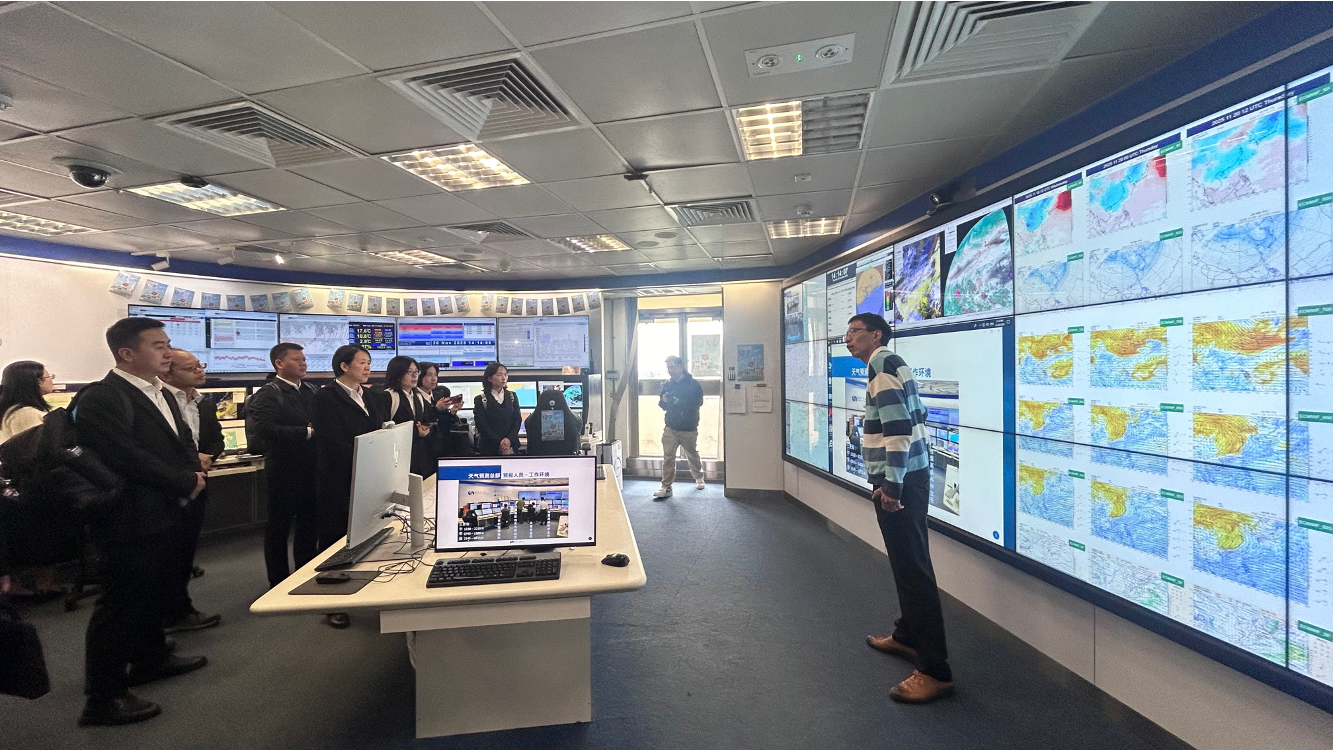 Expert team visits Hong Kong Observatory for exchange and learning
At Hong Kong and China Gas Company Limited, the expert team visited the Gas History Museum and Future Energy Hall. Jiang Shaoquan, General Manager of Commercial Affairs and Operations, introduced Hong Kong's latest plans for hydrogen energy utilization and engaged in in-depth discussions on ESG management system construction and the collaborative development model of energy enterprises and geological technologies. Through these exchange visits, the expert team gained a comprehensive understanding of Hong Kong’s technical accumulation and governance logic in urban infrastructure management, energy security, and meteorological early warning system construction, laying a broader perspective and practical foundation for future cooperation in geological disaster prevention and urban resilience building.
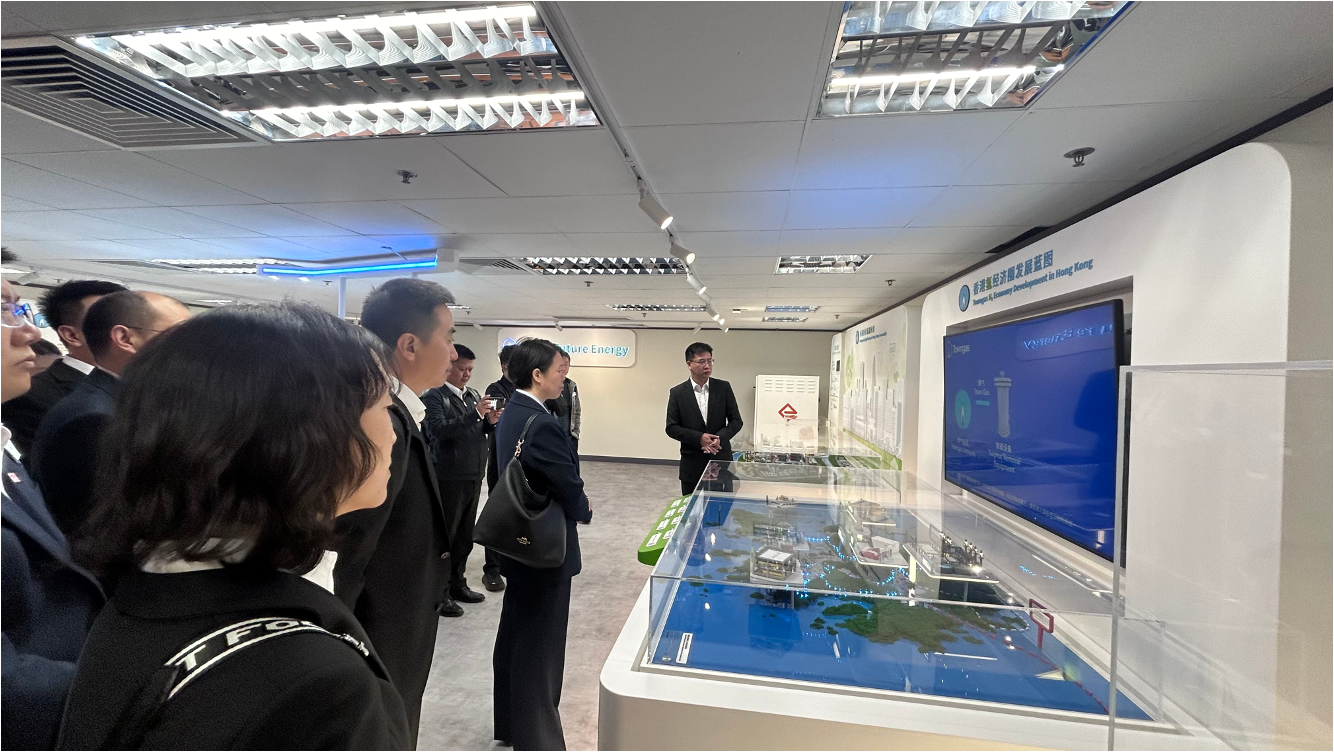 General Manager of Commercial Affairs and Operations at Hong Kong and China Gas, Jiang Shaoquan, introduces Hong Kong’s latest developments in hydrogen energy utilization.
During the visit to Hong Kong MTR Headquarters, the expert team engaged in in-depth communication with the MTR Sustainable Development team to gain a comprehensive understanding of MTR's operational model within the urban transportation system and its practices in safety supervision, facility maintenance, and risk management. The MTR team highlighted their specific measures under the sustainable development strategy, including geological environment monitoring along rail transit, underground structure health assessment, and response mechanisms to major weather events. They also shared cases on using digital tools, sensor networks, and real-time data platforms to enhance infrastructure resilience and operational efficiency. Both sides discussed potential geological risks in urban expansion, optimization of emergency response processes, and future cooperation opportunities in disaster early warning system development, allowing the expert team to gain a deeper, systematic understanding of the synergy between high-density transportation systems and urban safety governance.
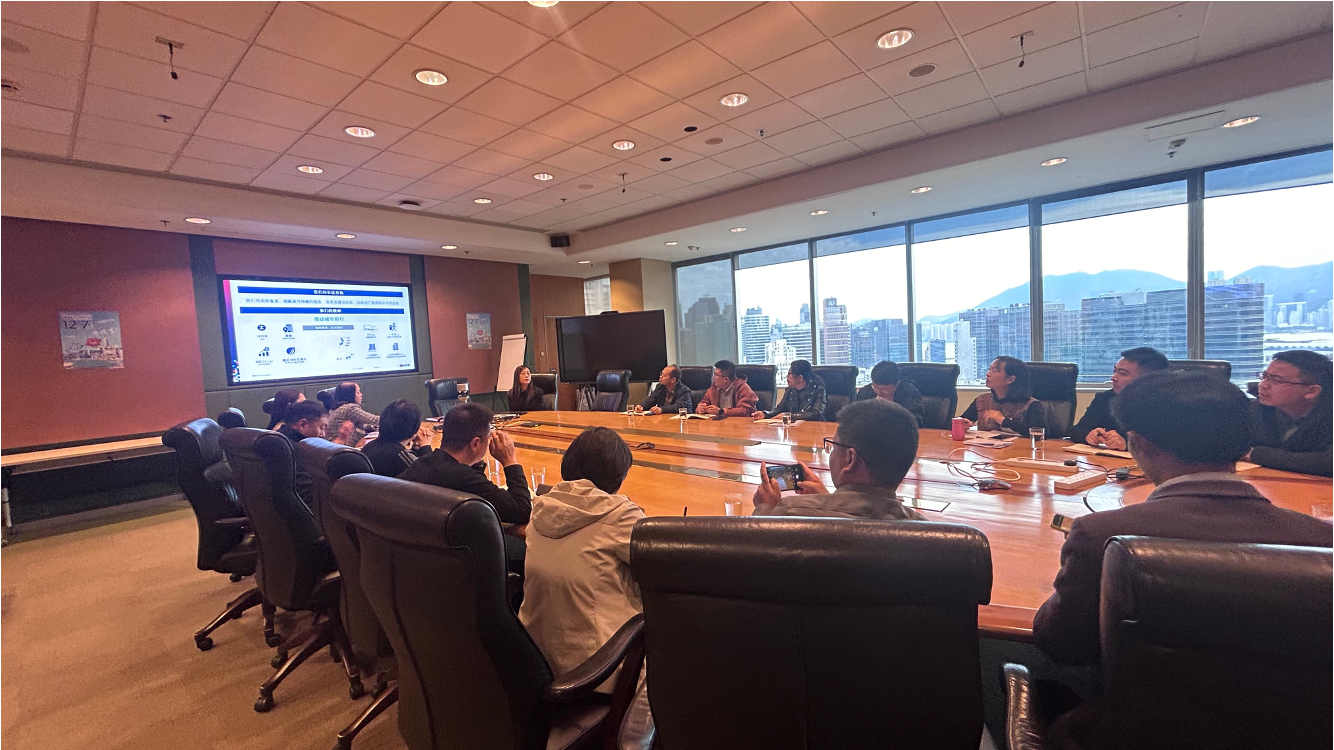 Expert team visits Hong Kong MTR Headquarters for exchange and learning
Training Results Transformation and Launching a Cooperation Framework
With the successful conclusion of this training, Sichuan and Hong Kong have taken a key step in cooperating in urban geological disaster monitoring and resilience building, opening new space for higher-level scientific research collaboration, result transformation, and standard co-development. In the context of frequent extreme events due to climate change and increasing natural disaster risks, strengthening urban safety governance through technology has become a global challenge. The experiences, mechanisms, and consensus formed during this training not only provide valuable examples for Sichuan and Hong Kong to build technology-driven disaster management systems but also further promote the transition of disaster monitoring and early warning technologies from research results to systematic applications.
In the future, as subsequent cooperation deepens, both parties will further integrate key elements such as satellite remote sensing, artificial intelligence, meteorological models, and engineering safety to build a scalable, replicable, and sustainable urban disaster prevention and mitigation technology system, continuously contributing to the creation of safer, more resilient, and future-oriented urban environments.